Lithium

Li
Atomic Number – 3
Mass number – 6.941amu
History and Properties
As the 31st most abundant element, Lithium is one of four of the only element that was created in the first few minutes in the universe as a result of the Big Bang. Discovered in 1817, by Swedish chemist Johann Arfvedson while studying the mineral petalite, it was given the name “lithium” from the Greek word “lithos” which means “stone”.

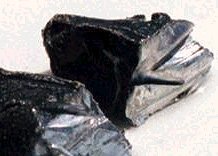
The lightest of all metals, the density of Lithium is half that of water and is quite buoyant. Lithium metal is flammable and likely to explode when exposed to air and even more likely when exposed to water. Due to the element’s high ability to react, it does not occur in its pure form, but chemically combined with other elements.
When burned, a sharp, crimson red flame is created. In 1818, German chemist Christian Gmelin was the to first observed that the salts in Lithium give this color to the flame. If the burning continues, the flame changes to a bright white color.
Uses
The production of Lithium metal was successfully begun in 1923 and was greatly increased after the conclusion of World War II. The top manufacturer in the world is currently Chile, followed by Argentina.

Nowadays, Lithium metal is used in many common devices, including batteries, especially cell phones and cameras, toasters, microwaves, and other household appliances, as well as in more complex construction, such as aircraft materials. It is also a component for the development of nuclear weapons.
Lithium also has various medical uses and is notorious for its positive effects on the nervous system. It is used in the treatment of severe mental disorders, such as bipolar disorder, and to enhance the effectiveness of other antidepressants. Lithium compounds are used as mood stabilizing drugs. They can also be prescribed as prevention for migraine disease and cluster headaches.
Interesting Facts
Lithium is soft enough to be cut with a knife.It is the only metal that reacts with nitrogen at room temperature.
It has t he highest specific heat capacity of all solids.
Lithium fires are hard to put out, and need special chemicals designed to smother them.
Around 39,000 tons of lithium are produced each year at the price of $300 per pound.
Links
http://en.wikipedia.org/wiki/Lithium
posted by rzaporowski @ 6:24 AM


5 Comments:
Rachel- this is really good! I learned a lot of stuff about lithium! I really like your pictures and the interesting facts!
~~EliZabeth*
Great job rachel!! Love the many pics, learned a lot, and it's way better than mine! Li is so cool, and I learned that it's used in airplanes! You must be happy.
~~Jem
thanks for the comment on mine!
i'll leave a comment for you in the place of mr dubel:
Love your project rachel! A+++++++
he will probly leave one soon, just wait
Who knew all about lithium's medical uses--no wonder its used in songs
Post a Comment
<< Home